

 By
By Beyond the Brochure: Why Understanding Global Travel Warnings is Essential for Every Traveler and Travel Agent
The dream of global exploration often involves pristine beaches, historic monuments, and the thrill of the unknown. Yet, for the seasoned globetrotter, the professional travel agent, and even the casual vacation planner, a crucial part of the journey lies not in the destination itself, but in the official travel advisories that accompany it. These warnings are not merely bureaucratic footnotes; they are life-saving guides issued by governments to protect their citizens from immediate, critical risks.
In a rapidly changing world, where geopolitical conflicts, civil unrest, and humanitarian crises can erupt or shift focus overnight, official advisory lists are constantly being updated. Recently, a specific list of 21 countries has garnered significant attention—destinations where governments, such as the U.S. State Department, have issued their highest level of caution: Level 4, ‘Do Not Travel.’
For the modern travel agent, comprehending this list is a matter of professional integrity and liability. For the traveler, it’s the difference between an exciting adventure and a life-threatening crisis. This comprehensive article delves deep into this pivotal list, examining the core reasons behind the Level 4 warnings, the implications for insurance and assistance, and how professional guidance can help you navigate a complex, and sometimes dangerous, world map. We will not only look at the what, but the why, ensuring you have the knowledge to make informed, responsible decisions for your personal travel cast—be it a family, a group of friends, or a solo expedition.

What Constitutes a Level 4 ‘Do Not Travel’ Advisory? Deciphering the Highest Warning
Before we delve into the specifics of the 21 countries, it is imperative to understand the gravity of a Level 4 warning. Most government advisory systems use a four-tiered structure, with Level 4 representing the most severe threat level. It signifies a greater likelihood of life-threatening risks and usually includes a stark disclaimer: during an emergency, the issuing government may have very limited or no ability to provide assistance, including evacuation.
This is a serious communication that goes far beyond general warnings about petty crime or seasonal health risks. A Level 4 classification is reserved for scenarios where the immediate safety and security of travelers are under extreme threat.
The Core Risk Indicators: Why These Countries Make the List
The decision to place a country on the Level 4 list is based on specific, verifiable risk factors that pose an existential danger to visitors. These risk indicators are standardized and typically involve a combination of the following:
- T (Terrorism): The presence of active terrorist groups, frequent attacks, or credible threats against civilians, tourists, or foreign interests.
- K (Kidnapping or Hostage Taking): A high risk of travelers being seized or detained by criminal or terrorist organizations for ransom or political leverage. This is a primary concern for the travel agent when planning trips near unstable borders.
- C (Crime): Widespread, violent, and/or organized crime, where local law enforcement’s ability to respond to serious incidents is severely limited or non-existent.
- U (Civil Unrest): Severe political, economic, or ethnic instability leading to frequent, violent demonstrations, rioting, or armed conflict that can trap or endanger foreigners.
- A (Armed Conflict): The presence of active war, intense internal conflicts, or battles between opposing military forces or armed groups.
- D (Wrongful Detention): A risk that foreign nationals may be arbitrarily arrested, detained, or persecuted by the host government for exercising fundamental rights or for political reasons.
- H (Health): A severe health crisis, such as a pandemic or outbreak, combined with a breakdown in medical infrastructure.
It is rare for a country to receive a Level 4 warning based on only one factor; the 21 countries on this current list typically suffer from a severe combination of several.
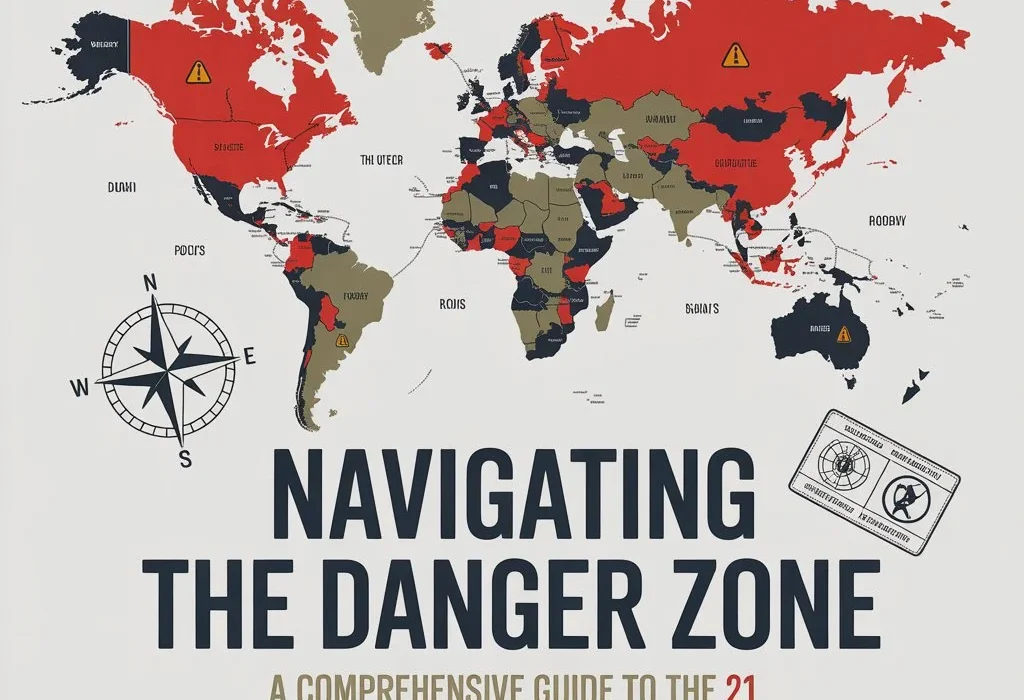
The Global Danger Map: A Deep Dive into the 21 ‘Do Not Travel’ Countries
The current list of 21 countries under the highest advisory covers diverse regions, each with its unique, yet equally severe, blend of risk factors. Analyzing this list provides a sobering snapshot of global instability.
War Zones and Intense Armed Conflict
Several countries on the list are grappling with ongoing, active military conflicts, making all civilian travel inherently dangerous.
- Ukraine: The war with Russia remains the overriding threat, with constant missile strikes, ground combat, and the unpredictable nature of an active conflict zone.
- Syria: Years of civil war have devastated the country, leaving a landscape marked by armed groups, terrorism, and an almost complete breakdown of infrastructure and security.
- Yemen: Ravaged by conflict, the country faces risks of armed conflict, terrorism, kidnapping, and the presence of widespread landmines.
- Libya: Decades of political instability have led to ongoing armed conflict, civil unrest, crime, and the proliferation of landmines.
- Sudan: Marked by recent intense conflict, the country is currently facing extreme levels of armed conflict, civil unrest, and an associated humanitarian crisis.
Pervasive Terrorism and Kidnapping Risks
In other countries, the primary threat stems from non-state actors, criminal gangs, and militant groups who specifically target foreigners. The risk of kidnapping is a major deterrent for most legitimate travel planning.
- Afghanistan: High risks of terrorism, civil unrest, crime, and the critical danger of wrongful detention and severely limited healthcare facilities.
- Somalia: Known for terrorism, crime, civil unrest, and a long-standing threat of piracy off its coast, making maritime travel hazardous.
- Mali: A high risk of terrorism, crime, and kidnapping, particularly in its northern and central regions where militant groups operate.
- Burkina Faso: Due to rapidly increasing terrorism, crime, and kidnapping, particularly near its borders, it recently joined the most severe advisory level.
- Central African Republic (CAR): Persistent armed conflict, crime, civil unrest, and kidnapping dominate the risk profile.
- Democratic Republic of the Congo (DRC): Armed conflict, widespread crime, civil unrest, and the continued threat of kidnapping and terrorism in its eastern provinces.
- South Sudan: Facing armed conflict, pervasive crime, and the critical risk of kidnapping across its territory.
- Haiti: Driven to Level 4 largely by catastrophic levels of kidnapping, gang-related violence, crime, and a crippled healthcare system.
- Iraq: Continued threat of terrorist attacks, armed conflict, civil unrest, and kidnapping, despite official shifts in control.
- Lebanon: High risks of crime, terrorism, civil unrest, and armed conflict, often linked to regional instability.
Risk of Wrongful Detention and Arbitrary Law Enforcement
A particularly chilling warning for the modern traveler is the risk of wrongful detention (D), where foreign governments use arbitrary legal processes against international visitors, often for political gain or leverage. This is a severe threat that conventional travel insurance cannot fully mitigate.
- North Korea (DPRK): The warning here is explicit and long-standing: an extreme and continuing serious risk of arbitrary arrest, long-term detention, and the threat of wrongful detention. All but essential humanitarian travel is strictly prohibited.
- Russia: Risks include arbitrary enforcement of local laws, potential for wrongful detention, and security concerns stemming from the war in Ukraine.
- Iran: High risk of terrorism, civil unrest, kidnapping, arbitrary arrest, and wrongful detention, particularly of dual nationals.
- Belarus: Closely aligned with Russia, the country is marked by the arbitrary enforcement of local laws, risk of detention, and facilitation of the war in Ukraine.
- Venezuela: Severely limited healthcare, crime, civil unrest, and the specific risk of wrongful detention and arbitrary law enforcement.
- Burma (Myanmar): Ongoing civil unrest, armed conflict, a high risk of wrongful detention, and a breakdown of the rule of law following political events.
The Travel Agent’s Dilemma: Ethics, Liability, and Earning Your Commission
For the professional travel agent, this list is a non-negotiable standard. The idea that a client is looking for exotic, unusual countries is a romantic notion, but guiding them toward a Level 4 destination is professional malpractice. Understanding how travel agents get paid is often linked to the value they provide, and few services are more valuable than preserving a client’s safety.
Professional Responsibility and Liability
A good travel agent will actively screen their clients’ potential destinations against official advisories.
- Duty of Care: Agents have an ethical and legal duty to inform clients about all known, significant risks associated with a destination. Ignoring a Level 4 warning violates this duty.
- Insurance Voidance: A critical point is that standard travel insurance policies, especially for trip cancellation and medical evacuation, are often voided the moment a Level 4 advisory is issued for a destination. Advising a client to go to such a place is advising them to travel uninsured.
- The Power of ‘No’: The best agents know when to say no to a high-risk request and pivot the client to a safer, comparable alternative. This demonstrates expertise and prioritizes client welfare, which is the ultimate business builder.

Explaining the Costs of Risk: Travel Agents Get Paid for Expertise
When a client questions why a highly-rated travel agent discourages a certain destination, the agent must be ready to articulate the financial and personal risks.
- Evacuation Costs: In a Level 4 country, a government-facilitated evacuation is not guaranteed. Private evacuations can cost hundreds of thousands of dollars, a figure often not covered by standard insurance if the advisory was in place before booking.
- Medical Care: The ‘H’ (Health) indicator means local medical services may be non-existent, substandard, or overwhelmed by conflict. Medevac from a war zone is logistically complex and exorbitantly expensive.
- Lost Trip Investment: Since insurance will likely be void, the entire cost of the trip, including non-refundable deposits and tickets, is lost.
The value proposition for the travel agent becomes clear: you are not just booking flights; you are a risk manager, protecting your client’s financial and physical future. This high-level, responsible guidance is precisely why travel agents get paid.
Safety First: Essential Protocols for Travel Planning in the Shadow of Warnings
While we strongly advise against any non-essential travel to these 21 countries, the principles behind managing high-risk travel are applicable to all destinations, even those at Level 2 (‘Exercise Increased Caution’). Adopting a safety-first mindset is crucial for every member of your travel cast.
The Traveler’s Toolkit: Preparation and Contingency Planning
If you must travel to a high-risk area (for essential work, journalism, or humanitarian aid, for example), or if a Level 4 warning is unexpectedly issued while you are in a Level 3 country, rigorous planning is non-negotiable.
- Enroll in STEP: For U.S. citizens, the Smart Traveler Enrollment Program (STEP) is vital. It registers your travel with the nearest Embassy or Consulate, making it easier for them to contact you in an emergency. Similar programs exist in the UK, Canada, and Australia.
- Secure Specialized Insurance: Standard travel insurance is inadequate. You will need a specialized policy that explicitly covers Cancel For Any Reason (CFAR) and, more importantly, High-Risk Medical and Non-Medical Evacuation, including coverage for political unrest and terrorism.
- Create a Communications Plan: Establish multiple communication methods (satellite phone, encrypted apps, pre-arranged check-in times) with your travel cast back home. Share your full itinerary and passport copies.
- Pre-Plan Evacuation Routes: Work with your specialized security or insurance provider to identify two to three primary and secondary evacuation routes (land and air) and safe havens near your destination.
- Maintain a Low Profile: Avoid conspicuous displays of wealth, stick to recommended safe zones, and limit public use of mobile devices, which can be used to track you.
Navigating the Time Travel Paradox: Looking Ahead and Learning from the Past
The term “time travel” might seem out of place in a discussion on global security, but it serves a critical metaphorical purpose in travel planning:
- Looking Backward (Historical Context): Understanding why certain countries are unstable often requires looking back at their political history, civil wars, and regional disputes. A good agent will research the historical roots of unrest, not just the current headlines.
- Looking Forward (Future Mitigation): Every action taken before and during a trip is a form of risk mitigation against potential future events. Proper insurance, contingency funds, and secure logistics are all about creating a safer future for your travel cast.
The most effective travel is an exercise in applied time travel—using the wisdom of the past to safeguard the future.
The Economic and Humanitarian Impact of the ‘Do Not Travel’ List
The issuance of a Level 4 advisory is not just about traveler safety; it carries significant economic and humanitarian consequences for the countries themselves.
Crippling the Local Travel & Tourism Sector
For many fragile economies, the tourism sector provides vital income and jobs. A Level 4 warning instantly and comprehensively kills legitimate, insured, non-essential travel.
- Insurance Freeze: Major airlines, cruise lines, and international tour operators will halt operations and often refuse to issue tickets to Level 4 zones, as their own corporate insurance is invalidated.
- Economic Isolation: The loss of tourism revenue further destabilizes the country, creating a vicious cycle where economic hardship fuels the very unrest or crime that triggered the warning.
The Role of Responsible Travel: A Call to Action for Your Travel Cast
For those who wish to help the people in these distressed countries, the call to action is not to ignore the warning and visit, but to support legitimate humanitarian efforts.
- Financial Aid: Support vetted international aid organizations that provide relief on the ground, ensuring your funds directly address the humanitarian crisis (Health, Unrest) that the travel warning highlights.
- Advocacy: Use your voice to advocate for human rights, conflict resolution, and stability in these regions, rather than risking your own life and potentially diverting limited consular resources.

The Informed Traveler’s FAQ: Your Burning Questions Answered
We asked a panel of experienced travel agents and security experts the most common questions they receive about Level 4 advisories.
If my travel agent booked me a trip to a country that later became Level 4, what happens to my money?
A: If your travel agent booked you with a reputable tour operator or airline before the Level 4 warning was issued, your insurance policy may cover cancellation for a specified event like war, civil unrest, or a terrorist attack, but only if you purchased a comprehensive policy. The agent’s role is to help you file the claim immediately. If you did not have insurance, you will likely lose the non-refundable portions of the trip. Always ensure your travel agent advises on and provides travel insurance options.
Are there exceptions where I should ignore a ‘Do Not Travel’ warning?
A: No, not for leisure. The only valid exceptions are for essential purposes: official government business, life-saving humanitarian aid, or professional journalism, and even then, such missions are undertaken with private, high-level security, armored transport, and dedicated evacuation teams. For the average member of your travel cast, a Level 4 warning should be considered an absolute prohibition on non-essential travel.
What is ‘Wrongful Detention’ (D) and why is it listed for countries like Iran and Russia?
A: ‘Wrongful Detention’ is a specific risk indicator where the host government arbitrarily arrests and detains foreign citizens, often without credible charges, to gain political leverage over the detainee’s home country. This risk is considered severe because standard legal defense procedures are often useless, and the detainee’s fate is tied to high-level international diplomacy. It is a key reason for the Level 4 advisories in countries where the rule of law is politicized.
If I have dual citizenship, does the travel warning still apply to me?
A: Yes, in many cases, the risk is higher. Several Level 4 countries, particularly Iran and Burma (Myanmar), explicitly target dual nationals for wrongful detention. In these scenarios, the foreign government often views you only as a citizen of their country, denying you access to consular assistance from your other country’s embassy. This is an extremely dangerous situation that requires the utmost caution.
Conclusion: Your Responsibility in Global Travel and the Future of the Travel Cast
The list of 21 countries currently under the U.S. State Department’s most severe ‘Do Not Travel’ advisory is a stark reminder of the complexities and dangers that still exist in our world. While the spirit of adventure calls us to all corners of the globe, prudence and safety must be the ultimate guides.
For the travel agent, this is an opportunity to showcase integrity, expertise, and a commitment to client safety, validating why travel agents get paid to manage risk and provide superior guidance. For the traveler, it’s a call to be a globally aware citizen, understanding that your choices have consequences—not just for your own safety, but for the consular resources of your home nation.
Do your research. Get the right insurance. And most importantly, heed the Level 4 warnings. The world is vast, beautiful, and filled with countless safe destinations. Ensure the next travel memory you make is an unforgettable adventure, not an unmitigated disaster.
